
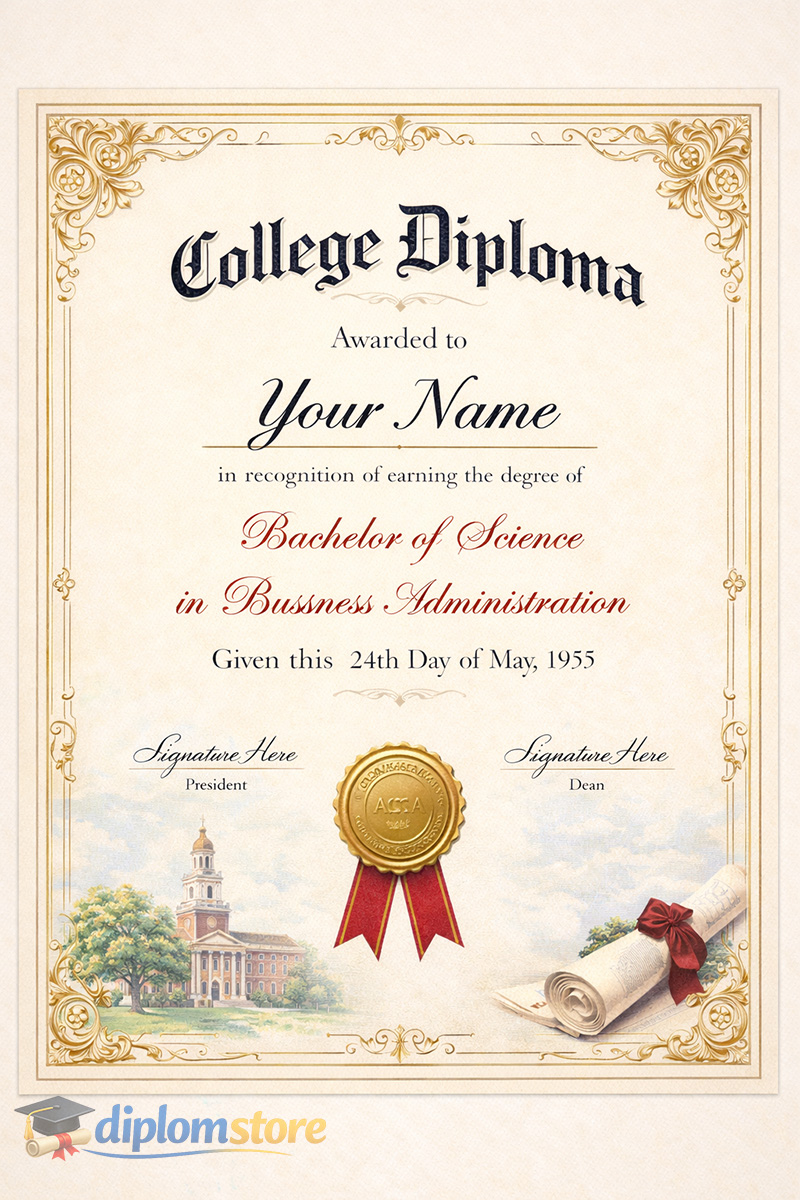
 When a college diploma goes missing, gets damaged, or requires verification, the immediate concern is how to restore it quickly while preserving its authenticity and protecting personal data.
Why Diploma Restoration Becomes Critical
Employers, licensing boards, and graduate schools often require proof of completion. A lost or unreadable diploma can delay job offers, postpone further study, or complicate visa applications. The core issue is not just having a piece of paper; it is maintaining the credibility of the original award.
Common Scenarios that Trigger a Restoration Need
- Fire, water or pest damage that renders the original unreadable.
- Accidental loss during relocation or travel.
- Institutional policies that request a certified copy for verification.
- Personal archiving projects that demand high‑quality reproductions for display.
Step‑by‑Step Guide to Restoring a College Diploma
Below is a practical workflow that can be followed whether you handle the process yourself or enlist professional assistance.
1. Verify the Original Issuer’s Requirements
Most universities publish specific guidelines for diploma replacement. These often include:
- Proof of identity (government‑issued ID, passport).
- Proof of enrollment or graduation (transcript, student number).
- A signed request form.
- Payment of a nominal administrative fee.
Checking the official website eliminates unnecessary delays.
2. Gather Supporting Documentation
Collect any of the following that you still possess:
- Official transcripts.
- Enrollment verification letters.
- Digital copies of the diploma (if previously scanned).
- Correspondence with the registrar’s office.
These documents create a paper trail that validates the request.
3. Request a Certified Replacement
Submit the compiled materials to the registrar’s office via their preferred channel – usually a secure portal or certified mail. Request a “certified replacement” rather than a generic copy; the former includes official seals and signatures that match the original.
4. Secure a Digitally Signed PDF (Optional)
Some institutions now issue a PDF version that carries a digital signature. This file can serve as an interim proof while waiting for the physical document.
5. Evaluate the Need for a Professional Reprint
If the institution cannot issue a replacement or if you need a visual duplicate for framing, a professional reprint service can be considered. Choose a provider that follows these standards:
- Uses archival‑grade paper matching the original weight and texture.
- Replicates security features (watermarks, embossed seals) under strict quality control.
- Provides a proof for client review before final printing.
- Guarantees confidentiality through encrypted order handling.
When you decide to use such a service, a single, well‑documented request is usually sufficient.
Backup Solutions to Prevent Future Loss
Restoration is a reactive measure. Proactive backup reduces the likelihood of repeating the process.
Digital Archiving Best Practices
- High‑Resolution Scanning: Scan the diploma at 300 dpi or higher, preserving color fidelity.
- Secure Cloud Storage: Store the file in a reputable cloud service with two‑factor authentication.
- Encrypted Local Backup: Keep an encrypted copy on an external hard drive, preferably in a fire‑proof safe.
- Metadata Tagging: Add descriptive metadata (student ID, graduation year, issuing institution) to aid future retrieval.
Physical Preservation Techniques
- Frame the diploma behind UV‑filtered glass.
- Use acid‑free backing boards to prevent paper yellowing.
- Store in a climate‑controlled environment (temperature 65‑70°F, relative humidity 45‑55%).
- Consider a sealed archival sleeve for extra protection.
Periodic Verification
Every few years, request a status check from the issuing university. Many registrars confirm that the record remains active and unchanged, which can be useful for visa renewals or professional licensing.
Frequently Asked Questions (Quick Summary)
- How long does a certified replacement take? Most universities process requests within 2–4 weeks, depending on workload and verification steps.
- Is a digital PDF accepted by employers? Some organizations accept a digitally signed PDF as provisional proof, but a physical certified copy is usually required for final verification.
- Can I replace a diploma without paying a fee? Administrative fees are standard; they cover verification and handling costs.
- What security features should I look for on a replacement? Holographic seals, embossed university crests, watermarks, and serial numbers that match the original issuance series.
- How often should I update my backup? At least once a year, or immediately after any change in storage conditions.
Case Study: Restoring a Lost Engineering Diploma
John graduated with a B.Sc. in Mechanical Engineering in 2012. After moving abroad, his diploma was damaged in a flood. He followed the steps outlined above:
- He visited his alma mater’s registrar portal and downloaded the required forms.
- He submitted his passport scan, student number, and a notarized statement of loss.
- The university issued a certified replacement within three weeks, complete with the original embossed seal.
- John then scanned the new diploma at 600 dpi, stored the PDF in an encrypted cloud folder, and placed the physical copy in an archival frame.
The process cost him a modest administrative fee and saved him weeks of job‑application delays.
Choosing a Reliable Restoration Partner
If you need a professional reprint, verify that the provider adheres to the following:
- Transparent production workflow with a proof‑approval stage.
- Evidence of compliance with document‑security standards (e.g., ISO 9001).
- Clear privacy policy outlining data handling and shipping confidentiality.
- Customer testimonials that reference successful academic‑credential projects.
For a vetted list of partners, see the resources on our homepage.
Final Checklist Before You Finish
- Confirm the issuing institution’s exact replacement policy.
- Gather all identity and enrollment documents.
- Choose a secure method for submission (encrypted portal or certified mail).
- Plan a digital backup using high‑resolution scans and encrypted storage.
- Implement physical preservation measures to protect the new document.
By following these guidelines, you can restore a lost or damaged college diploma with confidence and eliminate the need for repeated searches or emergency requests.