
When the original Cambridge exam document is lost, damaged, or needs a pristine copy for framing, the first question is how to obtain a replacement that looks and feels indistinguishable from the official version.
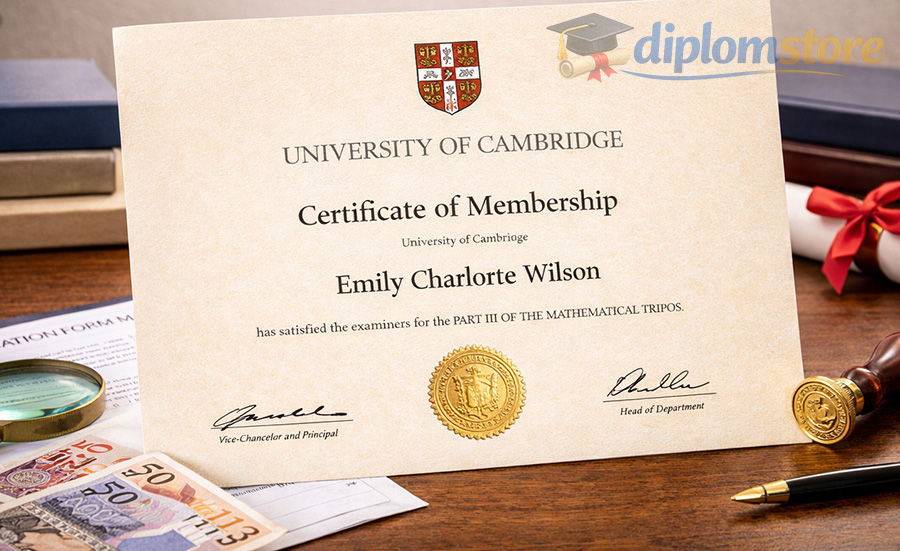
Quick Summary
- Who needs a replacement? Graduates, employers, and institutions requiring a visual representation of achievement.
- What to verify? Paper type, watermark, holographic seal, serial number, and typographic accuracy.
- Where to source? Specialized services that follow the exact security specifications of Cambridge Assessment.
- How to display? Use archival‑grade frames, UV‑protected glass, and climate‑controlled storage.
Understanding the Need for a Precise Replacement
Most people searching for “Cambridge exam replacement” are at the information stage. They have already earned the qualification, but a mishap—water damage, loss during relocation, or a desire to showcase the credential in a living‑room gallery—creates a gap. The hidden concern is whether a replica will stand up to scrutiny from future employers or academic committees.
Real‑World Example: The Marketing Manager’s Dilemma
Julia, a senior marketing manager, needed to include her Cambridge Advanced English certificate in a portfolio for an overseas promotion. The original was archived in a university vault and could not be retrieved in time. She required a replacement that would satisfy HR auditors while also looking impressive on a glass‑fronted wall. The solution involved three steps: authentic reproduction, quality verification, and professional display.
Key Elements That Define Authenticity
Cambridge Assessment embeds several security features into every official document. A reliable replacement must replicate each one precisely.
1. Paper Stock and Texture
Official certificates use 100‑gsm archival paper with a subtle watermark visible under angled light. The paper’s weight gives a tactile sense of importance; lighter stock feels cheap. A high‑fidelity replica must source the same grade, often referred to as “Cambridge‑grade” paper in the industry.
2. Watermarks and Holograms
These are embedded during the paper‑making process. The watermark typically includes the Cambridge crest, while a holographic foil adds a reflective layer that shifts color when tilted. Scanning the document at a 45° angle should reveal the hologram’s angular variation; any flat seal indicates a low‑quality copy.
3. Typeface and Layout
Cambridge uses a proprietary serif typeface for headings and a sans‑serif body font for details. The line spacing, margin widths, and alignment are standardized across all exam levels. Deviations, even by a few points, can be detected by a trained eye.
4. Serial Numbers and Verification Codes
Each certificate includes a unique serial number and a QR code that links to the verification portal operated by Cambridge. The QR code must be scannable and resolve to a page confirming the holder’s name, exam date, and score distribution.
Choosing a Trusted Replacement Service
Not all providers follow the same standards. Below is a checklist based on practical experience with leading suppliers.
- Production Technology: Look for services that employ high‑resolution offset printing and embossing machines capable of reproducing holographic foils.
- Quality Control: Multi‑stage inspection—visual, tactile, and digital (QR code test)—ensures consistency.
- Confidentiality: Encrypted order handling and discreet packaging protect personal data.
- Feedback Loop: Providers that offer a one‑day draft proof enable the client to confirm layout before final printing.
Our own process aligns with these criteria, delivering a 1:1 replica that survives rigorous comparison with the original.
Step‑by‑Step Guide to Obtain and Verify a Replacement
Step 1 – Gather Original Details
Collect any remaining fragments of the original document: serial number, issue date, and exam level. If a digital copy exists (e.g., a scanned PDF), capture a high‑resolution image for reference.
Step 2 – Request a Draft Proof
Submit the details to the chosen service and ask for a digital draft within 24 hours. Review the layout, font size, and placement of security elements. Confirm that the QR code resolves correctly.
Step 3 – Approve Production
Once the draft meets expectations, give the go‑ahead for full production. At this stage, the service will cut the paper, apply the watermark, emboss the seal, and print the serial number.
Step 4 – Perform Final Verification
When the replacement arrives, perform these checks:
- Feel the paper weight and compare it to any remaining official documents.
- Tilt the certificate to view the holographic foil; colors should shift.
- Scan the QR code with a smartphone to ensure it links to Cambridge’s verification portal.
- Compare the serial number with the one recorded in your personal archive.
Step 5 – Secure Display
Choose an archival‑grade frame with UV‑protective glass. Avoid direct sunlight; even a high‑quality replica can fade over years under intense UV exposure. Store the frame in a climate‑controlled room, maintaining humidity around 45 % to prevent paper warping.
Frequently Asked Questions
- Can a replacement be used for official purposes? No. The replica is intended for display, personal record‑keeping, or creative projects only. Official verification still requires the original.
- What is the turnaround time? Most reputable services provide a draft within a day and the final product within 5‑7 business days.
- Is there a risk of legal issues? As long as the replica is not presented as an official document and is clearly marked for non‑official use, the risk is minimal.
- How much does a high‑quality replacement cost? Prices vary by paper grade and security features; typical ranges are comparable to premium printing services.
Why a Professional Display Matters
Beyond aesthetics, a well‑presented certificate conveys credibility. Employers and peers often notice the details: the subtle sheen of the hologram, the precise embossing of the Cambridge crest, and the crispness of the print. A poorly framed or damaged replica can undermine the perceived value of the achievement.
By following the steps outlined above, you ensure that your Cambridge exam replacement not only matches the original in every visual and tactile aspect but also stands the test of time on your wall.
Take the Next Step
If you are ready to create a flawless replica that meets the highest standards of fidelity, explore the options available at DiplomStore. Their expertise in reproducing academic credentials guarantees a result that satisfies both visual expectations and the subtle security checks that distinguish an authentic‑looking document.